Laser Welding Machines for Stainless Steel: Key Considerations
 May. 28, 2026
Stainless steel is widely used in industries such as automotive manufacturing, kitchenware production, medical equipment, aerospace, construction, metal fabrication, and industrial machinery. Due to its corrosion resistance, strength, and clean surface finish, stainless steel requires precise and high-quality welding methods.
Laser welding machines have become one of the most efficient solutions for stainless steel processing because they offer high precision, minimal heat distortion, fast welding speed, and excellent weld appearance. Compared with traditional TIG or MIG welding, laser welding technology delivers cleaner and more consistent results, especially for thin stainless steel materials.
However, selecting the right laser welding machine for stainless steel applications requires careful evaluation of several technical and operational factors. This article explores the key considerations when choosing and using laser welding machines for stainless steel fabrication.
Why Laser Welding Is Ideal for Stainless Steel
Laser welding technology uses a concentrated laser beam to melt and fuse stainless steel materials with exceptional precision.
Main Advantages of Laser Welding Stainless Steel
High welding precision
Minimal heat affected zone
Reduced material deformation
Fast welding speed
Clean and smooth weld seams
Lower post-processing requirements
Strong and consistent weld quality
Suitable for thin and complex stainless steel parts
These benefits make laser welding machines increasingly popular in modern stainless steel manufacturing.
Types of Stainless Steel Commonly Welded by Laser Machines
Different stainless steel grades respond differently to laser welding.
Common Stainless Steel Materials
Austenitic Stainless Steel
Examples:
304 stainless steel
316 stainless steel
Features:
Excellent weldability
Good corrosion resistance
Widely used in food, medical, and decorative industries
Ferritic Stainless Steel
Features:
Lower nickel content
Good thermal conductivity
Suitable for automotive and appliance applications
Martensitic Stainless Steel
Features:
High hardness
Used in tools and industrial components
Requires careful heat control during welding
Duplex Stainless Steel
Features:
High strength
Excellent corrosion resistance
Common in marine and chemical industries
Laser welding parameters must be optimized according to the stainless steel type.
Key Considerations When Choosing a Laser Welding Machine for Stainless Steel
1. Laser Power Selection
Laser power is one of the most important factors affecting welding quality and production efficiency.
Low Power Laser Welding Machines
Typical range:
1000W–1500W
Suitable for:
Thin stainless steel sheets
Precision welding
Small components
Medium Power Laser Welding Machines
Typical range:
2000W–3000W
Suitable for:
Medium-thickness stainless steel
Industrial fabrication
Continuous production lines
High Power Laser Welding Machines
Typical range:
4000W and above
Suitable for:
Thick stainless steel plates
Heavy industrial applications
Deep penetration welding
Choosing incorrect power levels may cause:
Incomplete penetration
Burn-through
Excessive heat input
Weld defects
2. Stainless Steel Thickness
Material thickness directly determines the required laser configuration.
General Welding Thickness Guidelines
3. Welding Speed Requirements
Laser welding machines are known for high production efficiency.
Factors Affecting Welding Speed
Laser power
Material thickness
Joint design
Beam quality
Operator skill
Automation level
High-speed welding improves productivity while reducing manufacturing costs.
4. Heat Control and Deformation Prevention
Stainless steel is sensitive to heat distortion.
Excessive heat input can lead to:
Warping
Surface discoloration
Reduced corrosion resistance
Structural weakness
How Laser Welding Reduces Deformation
Laser welding creates:
Small heat affected zones
Concentrated energy input
Faster cooling rates
This makes it ideal for precision stainless steel fabrication.
5. Beam Quality and Welding Precision
High beam quality improves:
Weld seam consistency
Penetration stability
Surface appearance
Precision control
Industries such as medical device manufacturing and electronics require extremely accurate laser welding systems.
6. Fiber Laser vs CO2 Laser for Stainless Steel
Fiber Laser Welding Machines
Advantages:
Higher energy efficiency
Faster welding speed
Lower maintenance costs
Better stainless steel absorption rate
Compact structure
Fiber lasers are now the dominant choice for stainless steel welding applications.
CO2 Laser Welding Machines
Advantages:
Stable performance for some applications
Limitations:
Higher maintenance
Larger footprint
Lower energy efficiency
Most modern stainless steel manufacturers prefer fiber laser welding systems.
7. Shielding Gas Selection
Shielding gases protect stainless steel welds from oxidation and contamination.
Common Shielding Gases
Argon
Most commonly used
Stable arc protection
Clean weld appearance
Nitrogen
Improves penetration in some stainless steel applications
Helium
Higher heat input
Used for thicker materials
Incorrect gas selection may cause:
Porosity
Oxidation
Weak weld seams
8. Welding Automation Level
Automation significantly improves stainless steel welding consistency.
Automated Laser Welding Systems Include
Robotic laser welding machines
CNC-controlled systems
Automatic seam tracking
Vision positioning systems
Automation benefits include:
Higher productivity
Reduced labor costs
Improved repeatability
Lower defect rates
9. Cooling System Efficiency
Laser welding machines generate significant heat during operation.
Efficient cooling systems help:
Maintain laser stability
Extend machine lifespan
Improve welding consistency
Most industrial laser welding machines use water chillers for temperature control.
10. Ease of Operation
Modern laser welding machines feature user-friendly interfaces.
Important features include:
Touchscreen controls
Parameter memory storage
Automatic calibration
Real-time monitoring
Alarm systems
Easy operation reduces training requirements and improves production efficiency.
Industries Using Stainless Steel Laser Welding Machines
Laser welding machines are widely used in:
Automotive Industry
Applications:
Exhaust systems
Battery components
Stainless steel body parts
Kitchenware Industry
Applications:
Sinks
Cookware
Stainless steel cabinets
Medical Industry
Applications:
Surgical instruments
Medical devices
Stainless steel implants
Aerospace Industry
Applications:
Precision stainless steel structures
Aircraft components
Sheet Metal Fabrication
Applications:
Cabinets
Enclosures
Decorative metal products
Common Challenges in Stainless Steel Laser Welding
Porosity
Caused by:
Contaminated surfaces
Poor gas protection
Cracking
Caused by:
Improper heat control
Material stress
Burn-Through
Caused by:
Excessive laser power
Slow welding speed
Surface Oxidation
Caused by:
Inadequate shielding gas
Proper parameter adjustment helps minimize these problems.
Maintenance Tips for Laser Welding Machines
Regular maintenance improves machine performance and weld quality.
Important Maintenance Tasks
Clean protective lenses
Check cooling systems
Inspect fiber cables
Maintain gas supply systems
Calibrate laser parameters
Clean dust and debris
Preventive maintenance reduces downtime and repair costs.
Future Trends in Stainless Steel Laser Welding
Smart Welding Systems
AI-driven welding systems improve automation and process optimization.
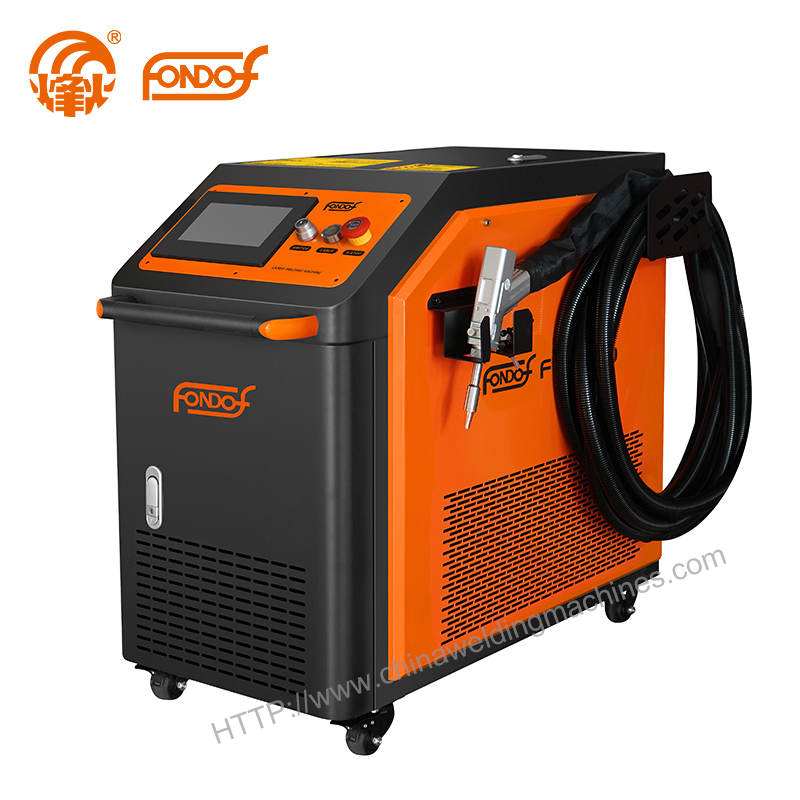
Handheld Laser Welding Machines
Portable handheld laser welders are becoming increasingly popular for flexible fabrication work.
Green Manufacturing
Energy-efficient laser welding systems support sustainable manufacturing goals.
Integration with Industry 4.0
Modern laser welding machines increasingly support:
Remote monitoring
Production data analysis
Predictive maintenance
Conclusion
Laser welding machines have become an essential solution for stainless steel fabrication due to their precision, efficiency, and superior weld quality.
When selecting a laser welding machine for stainless steel, manufacturers should carefully consider:
Laser power
Material thickness
Beam quality
Automation level
Cooling systems
Shielding gas selection
Production requirements
Modern fiber laser welding machines offer excellent performance for industries requiring high-speed, high-precision stainless steel welding.
As manufacturing standards continue to rise, advanced laser welding technology will play an increasingly important role in improving production efficiency, reducing operational costs, and ensuring consistent stainless steel weld quality across multiple industries.