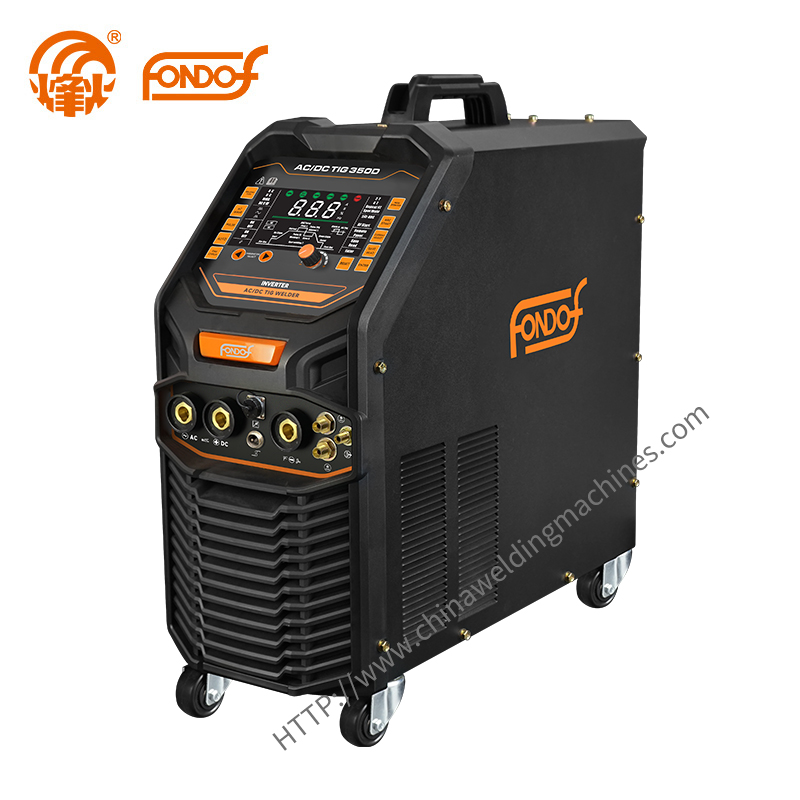
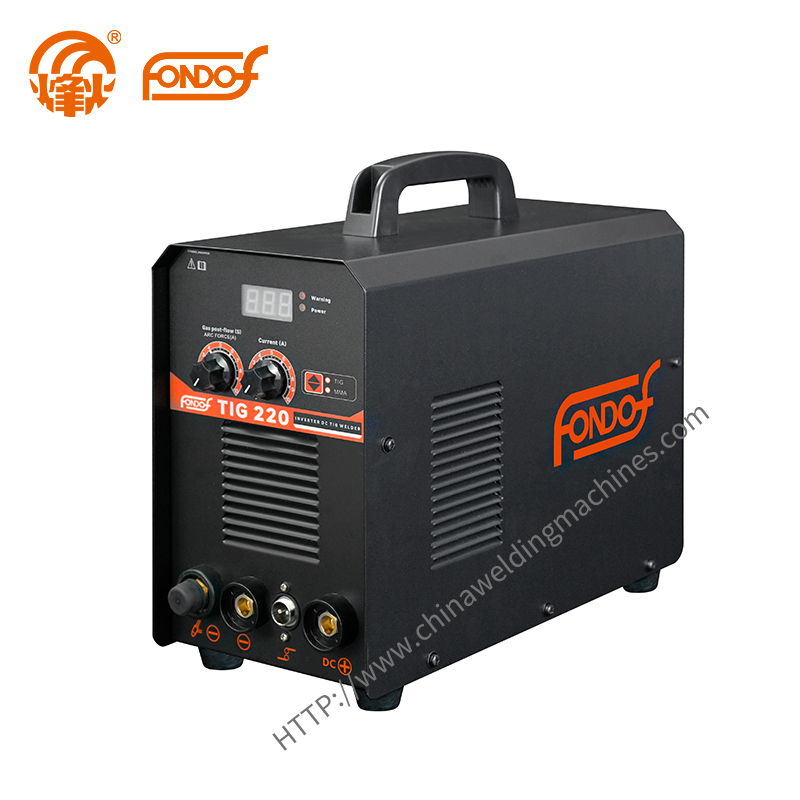
How DC TIG Welding Machines improve weld quality
 Aug. 17, 2026
Weld quality is determined by far more than whether two metal parts are successfully joined. For manufacturers, fabricators, maintenance teams, and professional welders, a high-quality weld should provide consistent penetration, controlled heat input, minimal defects, good appearance, and reliable mechanical performance.
This is where DC TIG welding machines offer significant advantages.
DC TIG, or Direct Current Tungsten Inert Gas welding, provides a stable welding arc and precise control over welding current. These characteristics make it especially suitable for applications involving stainless steel, carbon steel, copper, nickel alloys, titanium, and many other conductive metals where weld cleanliness and accuracy are critical.
Compared with welding processes designed primarily for deposition speed, TIG welding gives operators much greater control over the weld pool. When combined with a well-designed DC power source, this control can significantly improve consistency, penetration, appearance, and overall weld integrity.
This article explains how DC TIG welding machines improve weld quality, which factors affect performance, and what buyers should consider when selecting equipment for professional welding applications.
What Is a DC TIG Welding Machine?
A DC TIG welding machine uses direct electrical current to create an arc between a non-consumable tungsten electrode and the workpiece.
An inert shielding gas, most commonly argon, protects the molten weld pool and tungsten electrode from atmospheric contamination.
Unlike MIG welding, where the wire electrode is continuously fed into the joint, TIG welding separates the heat source from the filler material. The welder can therefore control:
Welding current
Travel speed
Arc length
Filler metal addition
Heat input
Weld pool shape
Shielding gas coverage
This level of control is one of the main reasons TIG welding is widely selected when weld quality is more important than maximum production speed.
For most DC TIG applications, DC electrode negative, or DCEN, is used. Electrons flow from the tungsten electrode toward the workpiece, concentrating a large proportion of the welding heat in the base material.
This helps produce relatively deep penetration while keeping the tungsten electrode cooler and more stable.
1. Stable DC Arc Improves Weld Consistency
One of the most important factors affecting TIG weld quality is arc stability.
An unstable arc can cause:
Irregular bead width
Inconsistent penetration
Excessive spatter
Tungsten contamination
Poor arc starts
Uneven heat distribution
Difficulty controlling the weld pool
A properly designed DC TIG welder delivers a smooth and consistent direct-current output.
Because the current does not continuously alternate between positive and negative polarity as it does in AC welding, the arc can remain highly concentrated and predictable.
This stability allows the operator to maintain a more uniform weld pool.
For production welding, repeatability is particularly important. If welding current fluctuates considerably between different parts or during a single weld, maintaining consistent penetration becomes difficult.
Modern inverter-based DC TIG welding machines generally provide much more accurate current regulation, helping the welder achieve similar arc characteristics across repeated welds.
2. Precise Current Control Reduces Heat-Related Defects
Excessive heat is one of the most common causes of welding problems.
Too much heat can lead to:
Burn-through
Excessive distortion
Large heat-affected zones
Discoloration
Reduced dimensional accuracy
Loss of mechanical properties in sensitive materials
Too little heat can create:
Lack of penetration
Lack of fusion
Incomplete joint bonding
Irregular weld profiles
DC TIG welding machines allow operators to set the welding amperage according to material thickness, joint configuration, electrode diameter, and welding position.
This precise amperage adjustment gives the welder much greater control over heat input.
For thin stainless-steel sheets or precision metal components, even relatively small changes in current can noticeably affect weld quality.
A TIG machine with stable low-current output makes it easier to establish and maintain a small weld pool without burning through the material.
For thicker sections, higher current can be applied in a controlled manner to obtain sufficient fusion and penetration.
3. DCEN Provides Concentrated Penetration
DC TIG welding is commonly performed using direct current electrode negative.
Under DCEN conditions, much of the arc energy is directed toward the workpiece.
This creates several important benefits.
Deeper Penetration
The concentrated heat helps the arc penetrate effectively into the joint.
Correct penetration is particularly important for structural welds, pressure-related components, pipelines, machine parts, and other applications where joint strength matters.
Narrower Heat-Affected Zone
Because the arc is focused, heat can be placed exactly where it is required rather than spreading unnecessarily across the surrounding material.
This can help reduce the width of the heat-affected zone.
Better Tungsten Stability
Because less heat is concentrated on the tungsten electrode compared with electrode-positive operation, the electrode is less likely to overheat.
A stable tungsten tip produces a more concentrated arc, which further improves weld precision.
4. Better Weld Pool Control Reduces Common Welding Defects
The TIG process allows the operator to clearly observe and manipulate the molten weld pool.
This can reduce defects such as:
| Welding Problem | How DC TIG Helps |
|---|---|
| Lack of fusion | Precise current control helps maintain adequate joint temperature |
| Excessive penetration | Current can be reduced according to material thickness |
| Burn-through | Stable low-amperage welding improves thin-sheet control |
| Irregular bead | Stable arc supports consistent travel and weld pool formation |
| Spatter | TIG welding produces very little spatter compared with many consumable-electrode processes |
| Excess filler metal | Filler rod addition is controlled independently |
| Undercut | Controlled travel speed and heat input make bead geometry easier to manage |
| Porosity | Proper inert gas shielding protects the molten metal from atmospheric contamination |
Of course, the welding machine alone cannot eliminate defects. Gas flow, surface preparation, electrode condition, filler wire selection, torch angle, joint preparation, and operator technique remain equally important.
However, stable power output gives the operator a stronger foundation for controlling these variables.
5. Low-Amperage Performance Improves Thin-Material Welding
Thin sheet welding is one of the areas where TIG welding demonstrates its greatest advantages.
When welding thin materials, the difference between sufficient fusion and burn-through can be very small.
A quality DC TIG welding machine should maintain a stable arc even at relatively low amperage.
This is especially valuable when welding:
Stainless-steel sheets
Thin steel tubes
Precision enclosures
Metal furniture
Automotive components
Exhaust systems
Kitchen equipment
Small fabricated parts
Instrument components
With stable low-current performance, the operator can use a smaller weld pool and carefully control heat accumulation.
This produces cleaner joints and helps minimize distortion.
6. High-Frequency Arc Starting Prevents Tungsten Contamination
Arc starting method also affects weld quality.
With traditional scratch-start TIG welding, the tungsten electrode may need to touch the workpiece before the arc begins.
This creates a risk of tungsten contamination.
If tungsten particles enter the molten weld pool, weld integrity and appearance can be affected.
Modern professional DC TIG machines often use high-frequency start, allowing the welding arc to initiate without direct contact between the tungsten electrode and workpiece.
This provides several advantages:
Cleaner arc initiation
Lower risk of tungsten contamination
Longer tungsten electrode life
Better protection of finished surfaces
More consistent weld starts
For stainless steel, titanium, precision fabrication, and other appearance-sensitive applications, non-contact arc starting can be especially important.
7. Pulse TIG Helps Control Heat Input
Many modern DC TIG welding machines include a pulse welding function.
During pulse TIG welding, the current alternates between a higher peak current and a lower background current.
The peak current provides sufficient energy for penetration, while the background current allows the weld pool to cool slightly.
This controlled cycling can improve weld quality in several ways.
Lower Average Heat Input
Pulse TIG reduces continuous heat accumulation, which is useful for thin materials.
Reduced Distortion
Lower average heat input can help maintain dimensional accuracy.
Better Weld Pool Control
The pulsing rhythm can help operators control filler addition and travel speed.
Improved Appearance
Pulse TIG can produce highly uniform weld bead patterns when welding parameters are properly adjusted.
Better Out-of-Position Welding
The weld pool partially solidifies during the lower-current period, making molten metal easier to control in vertical or overhead welding positions.
Typical adjustable pulse parameters may include:
Peak current
Background current
Pulse frequency
Pulse duty cycle
Machines offering a wide parameter adjustment range provide greater flexibility across different welding applications.
8. Adjustable Upslope and Downslope Improve Weld Starts and Endings
Weld defects often occur not in the middle of the joint but at the beginning or end.
Immediately applying full welding current can create an aggressive arc start, particularly on thin materials.
Similarly, abruptly stopping the current may create a crater at the end of the weld.
Modern DC TIG welders can include upslope and downslope control.
Upslope gradually increases welding current after arc ignition.
Downslope gradually reduces the current before arc termination.
These functions help provide smoother transitions.
Downslope is particularly useful for preventing end craters, which can become stress concentration points and potentially initiate cracking.
For precision TIG welding, controlling how the weld starts and finishes is an important part of improving overall joint quality.
9. Post-Flow Gas Protects the Weld During Cooling
Shielding should not stop immediately when the arc is extinguished.
The tungsten electrode and recently welded material may remain extremely hot and vulnerable to oxidation.
A DC TIG welding machine with adjustable post-flow gas control keeps argon flowing for a specified period after welding stops.
This protects:
The hot tungsten electrode
The solidifying weld pool
The surrounding heated metal
Correct post-flow settings can reduce oxidation and tungsten deterioration.
This becomes particularly important when welding oxidation-sensitive materials such as stainless steel, nickel alloys, and titanium.
Gas flow should still be optimized carefully. Excessive gas flow can create turbulence and potentially draw surrounding air into the shielding zone, while insufficient flow may fail to protect the weld adequately.
10. TIG Welding Produces Clean, Low-Spatter Welds
One of TIG welding's most recognizable advantages is weld cleanliness.
Because TIG uses a non-consumable tungsten electrode rather than a continuously melting wire electrode, there is typically very little spatter.
This has several practical advantages for manufacturers.
Less spatter means:
Reduced post-weld grinding
Less surface cleanup
Better cosmetic appearance
Lower risk of damaging nearby finished surfaces
Reduced finishing labor
For stainless steel equipment, architectural metalwork, food-processing machinery, decorative components, and other visible welds, this can significantly improve final product quality.
11. Independent Filler Metal Control Improves Joint Precision
Another major difference between TIG and many other welding processes is that filler metal is added separately from the arc.
The tungsten electrode creates the heat, while the operator adds filler rod only when required.
This gives the welder control over exactly how much filler material enters the joint.
For example, some thin joints may require very little filler metal, while other joints may require controlled additions to achieve the correct bead reinforcement.
This independence makes DC TIG especially useful for precision fabrication.
It also allows certain thin materials to be welded autogenously, meaning the joint is fused without additional filler wire when the application permits.
12. Remote Current Control Helps Maintain Consistent Heat
Some professional DC TIG machines support remote amperage control through a foot pedal or torch-mounted controller.
This allows the operator to adjust current dynamically during welding.
For example, when beginning a weld on cold material, slightly higher amperage may be necessary to establish the weld pool.
As heat accumulates along the joint, the operator may gradually reduce the current.
Without real-time adjustment, excessive heat accumulation can produce a wider bead or cause distortion toward the end of the weld.
Remote current control helps the operator compensate for these changing thermal conditions.
13. DC TIG Is Well Suited to Stainless Steel Welding
Stainless steel is one of the most common materials welded using DC TIG equipment.
High-quality stainless-steel welding requires careful control of heat input because excessive heat can lead to:
Distortion
Oxidation
Heavy discoloration
Excessive heat tint
Unwanted metallurgical changes
DC TIG provides the stable, concentrated arc required for controlling these effects.
When combined with the correct filler rod, shielding gas, purge arrangement, travel speed, and amperage, the process can produce smooth, clean welds with excellent appearance.
For pipes, tanks, food-processing equipment, pharmaceutical equipment, architectural components, and stainless-steel fabrication, this is a major advantage.
14. DC TIG Supports High-Quality Pipe and Tube Welding
Pipe and tube applications often require consistent penetration around the entire joint circumference.
This can be difficult because welding position continuously changes as the welder moves around the pipe.
A stable DC arc helps maintain consistent weld behavior throughout the joint.
TIG welding is frequently used for high-quality root passes because it offers excellent control over:
Root penetration
Weld pool size
Filler deposition
Joint fusion
Heat input
For applications where internal weld profile and cleanliness are important, these advantages become particularly valuable.
Which Metals Are Suitable for DC TIG Welding?
DC TIG welding can be used for many metals, including:
| Material | Typical DC TIG Suitability |
|---|---|
| Carbon steel | Excellent |
| Stainless steel | Excellent |
| Copper | Suitable with appropriate parameters |
| Nickel alloys | Excellent |
| Titanium | Excellent with proper shielding |
| Mild steel | Excellent |
| Chrome-moly steel | Excellent |
| Aluminum | Usually AC TIG is preferred |
| Magnesium | Usually AC TIG is preferred |
Aluminum requires special attention.
Although certain specialized applications can use DC TIG, conventional aluminum TIG welding is generally performed with AC TIG welding machines because alternating current provides oxide-cleaning action.
Therefore, buyers welding both steel and aluminum may benefit more from an AC/DC TIG welding machine rather than a DC-only unit.
Factors That Determine Final TIG Weld Quality
Buying a high-quality DC TIG machine does not automatically guarantee a perfect weld.
Several process variables must work together.
Tungsten Electrode Selection
Electrode diameter and type should match the welding current and application.
A damaged or contaminated tungsten electrode can create an unstable arc.
Electrode Preparation
The geometry of the tungsten tip influences arc concentration.
For DC TIG applications, a properly prepared pointed or slightly truncated electrode is commonly used depending on current level and electrode specification.
Shielding Gas
Argon is commonly used for general TIG welding.
Certain specialized applications may use helium or argon-helium mixtures to modify heat characteristics.
Gas Flow Rate
Gas flow must be sufficient to protect the molten weld pool without creating excessive turbulence.
Torch Angle
Incorrect torch positioning can disturb shielding gas coverage or direct heat away from the desired area.
Arc Length
A short, controlled arc generally provides more concentrated heat.
An excessively long arc can reduce control and increase atmospheric exposure.
Material Preparation
TIG welding is sensitive to contamination.
Oil, grease, rust, oxide, paint, moisture, or other surface contaminants can introduce weld defects.
Proper cleaning should therefore be part of every high-quality TIG process.
What Should Buyers Look for in a DC TIG Welding Machine?
For industrial buyers, workshops, distributors, and professional fabricators, weld quality depends partly on selecting equipment with the correct control capabilities.
Important specifications include:
Stable Low-Current Output
Especially important for thin sheet and precision fabrication.
Wide Welding Current Range
A broader current range allows one machine to handle different material thicknesses.
High-Frequency Start
Useful for clean, non-contact arc ignition.
Pulse TIG Function
Important for controlling heat input and improving weld pool control.
Adjustable Pre-Flow and Post-Flow
Helps optimize shielding before, during, and after welding.
Upslope and Downslope Adjustment
Provides greater control over weld starts and finishes.
2T/4T Torch Operation
Useful for adapting the machine to both short welds and longer continuous welding operations.
Remote Control Compatibility
Important for applications requiring continuous amperage adjustment.
Duty Cycle
Production users should pay close attention to rated duty cycle at the required welding amperage.
A machine intended for occasional repair work may not be suitable for continuous industrial fabrication.
Protection and Cooling Design
Reliable thermal protection, fan cooling, over-current protection, and stable electronic design contribute to long-term performance.
DC TIG vs Other Welding Processes for Weld Quality
No welding process is universally superior. The correct method depends on productivity, material, thickness, accessibility, joint requirements, and required weld quality.
| Factor | DC TIG | MIG/MAG | Stick Welding |
|---|---|---|---|
| Arc precision | Excellent | Good | Moderate |
| Heat control | Excellent | Good | Moderate |
| Thin material welding | Excellent | Good | Limited |
| Weld appearance | Excellent | Good | Moderate |
| Spatter | Very low | Moderate | Higher |
| Filler control | Excellent | Automatic wire feed | Electrode dependent |
| Welding speed | Moderate/slow | High | Moderate |
| Operator skill requirement | Higher | Moderate | Moderate |
| Outdoor usability | Limited by shielding gas | Limited by shielding gas | Very good |
| Precision applications | Excellent | Good | Limited |
For applications where production speed is the primary concern, MIG/MAG welding may be more productive.
When appearance, precise heat input, penetration control, and low defect levels are more important, TIG welding often provides stronger advantages.
How to Improve DC TIG Weld Quality in Production
Even with advanced welding equipment, process standardization is essential.
Manufacturers can improve consistency by establishing controlled welding procedures covering:
Base metal cleaning requirements
Joint preparation
Tungsten type and diameter
Tungsten tip preparation
Filler wire specification
Shielding gas type
Gas flow rate
Welding current
Pulse parameters
Torch angle
Arc length
Travel speed
Pre-flow and post-flow time
Interpass temperature where applicable
For repeated manufacturing operations, recording these parameters helps reduce dependence on individual operator habits.
Qualified procedures may also be necessary for safety-critical or code-governed welding applications.
Common Questions About DC TIG Weld Quality
Does DC TIG produce stronger welds?
DC TIG can produce strong, high-integrity welds when the joint design, penetration, filler metal, shielding, and welding parameters are correct. The welding process itself does not automatically determine joint strength; correct procedure and execution remain essential.
Why is TIG considered a high-quality welding process?
TIG gives the welder precise control over arc energy, filler metal addition, and weld pool movement. It also produces very little spatter and offers excellent visibility of the welding zone.
Is DC TIG good for thin stainless steel?
Yes. Stable low-amperage output and precise heat control make DC TIG particularly suitable for thin stainless-steel fabrication.
Can DC TIG weld aluminum?
DC TIG can be used for certain specialized aluminum welding techniques, but conventional TIG welding of aluminum and magnesium normally uses AC because alternating current assists with oxide cleaning.
Does pulse TIG improve weld quality?
Pulse TIG can improve heat control, reduce distortion, and make weld pool movement easier to manage, particularly on thin materials and difficult welding positions.
What causes poor TIG weld quality even with a good machine?
Common causes include contaminated material, incorrect gas flow, poor tungsten preparation, excessive arc length, wrong filler metal, inadequate penetration, incorrect amperage, and improper torch technique.
Conclusion
The main advantage of a DC TIG welding machine is control.
A stable direct-current arc allows welders to manage heat, penetration, filler addition, and weld pool movement with a level of precision that is difficult to achieve with many higher-deposition welding processes.
Features such as high-frequency starting, pulse TIG, low-amperage stability, adjustable slope control, gas post-flow, and remote amperage adjustment further improve the operator's ability to produce repeatable welds.
For manufacturers working with stainless steel, carbon steel, titanium, nickel alloys, precision tubing, thin sheet, or high-value fabricated components, these capabilities can translate into cleaner welds, fewer defects, less distortion, reduced finishing work, and more consistent finished products.
Ultimately, weld quality depends on the complete combination of machine stability, welding parameters, consumables, shielding gas, joint preparation, and operator technique. Selecting a DC TIG welding machine with the right current range and process-control functions gives professional welders the stable platform needed to achieve reliable, high-quality results.